How to Taste Coffee Like a Barista: A Beginner's Guide to Cupping
October 1, 2026
Learn how baristas taste coffee: what cupping is, the steps, and the words to describe what's in your cup. A beginner's guide from Kaldi & Kapra in Antigua.
Most of us drink coffee every day without really tasting it. We know if we like it, and that's about it. But there's a whole language behind every cup: fruit, chocolate, brightness, body. Baristas learn to hear it through a simple ritual called cupping.
October opens with International Coffee Day, so this month we're sharing how professionals taste coffee, and how you can start doing it too, whether at home or on our rooftop in Antigua.
What is coffee cupping?
Cupping is the method coffee professionals use to taste and compare coffees side by side. Farmers, roasters, buyers and baristas all use it to judge quality, find defects and describe flavor.
The idea is to remove everything that can hide a coffee's character. There's no machine, no milk, no sugar: just ground coffee, hot water and a spoon. That's why cupping is the most honest way to meet a coffee.
How does a cupping session work?
A cupping follows the same steps every time, so every coffee gets a fair chance.
1. Smell the dry grounds. Each coffee is ground and placed in its own cup. Before adding water, lean in and smell. This first aroma, called the fragrance, already tells you a lot.
2. Add hot water and wait. Water just off the boil is poured over the grounds. A crust forms on top as the coffee steeps for a few minutes.
3. Break the crust. With a spoon, you gently push through the crust and bring your nose close. This is often the most intense aroma of the whole session.
4. Clean the surface. The remaining foam and grounds are skimmed off so the coffee is ready to taste.
5. Slurp. Yes, loudly. Take a spoonful and slurp it fast so the coffee sprays across your whole palate. It feels strange the first time, but it's the best way to catch every flavor.
6. Compare as it cools. Coffee changes as the temperature drops. Many flavors only appear once the cup is warm rather than hot, so tasters go back to each cup several times.
What should you look for when tasting coffee?
You don't need a perfect vocabulary to start. Focus on four simple questions:
- Acidity: does it feel bright and lively, like citrus or green apple, or soft and round?
- Body: does it feel light and tea-like in your mouth, or heavy and creamy?
- Sweetness: do you notice caramel, honey, brown sugar or ripe fruit?
- Aftertaste: what stays with you after you swallow, and for how long?
Then try to name what it reminds you of. Chocolate, nuts, berries, flowers, spice: there are no wrong answers. Professionals often use a flavor wheel to help, but your own memories are the best reference.
Why is Guatemalan coffee so interesting to taste?
Guatemala grows coffee in very different landscapes, from volcanic slopes to high, dry mountains and cloudy rainforests. Those differences show up in the cup. Tasting coffees from different regions side by side is one of the best ways to understand that the same plant can express itself in completely different ways.
And Antigua, surrounded by volcanoes, is one of the most famous coffee regions in the country. Tasting coffee here means tasting it close to where it grows.
How can you practice at home?
Start small. Buy two different coffees, brew them the same way, and taste them side by side. Write down one word for each. Do it again next week with two others. In a few weeks, you'll be surprised by how much more you notice.
Learn cupping with our baristas
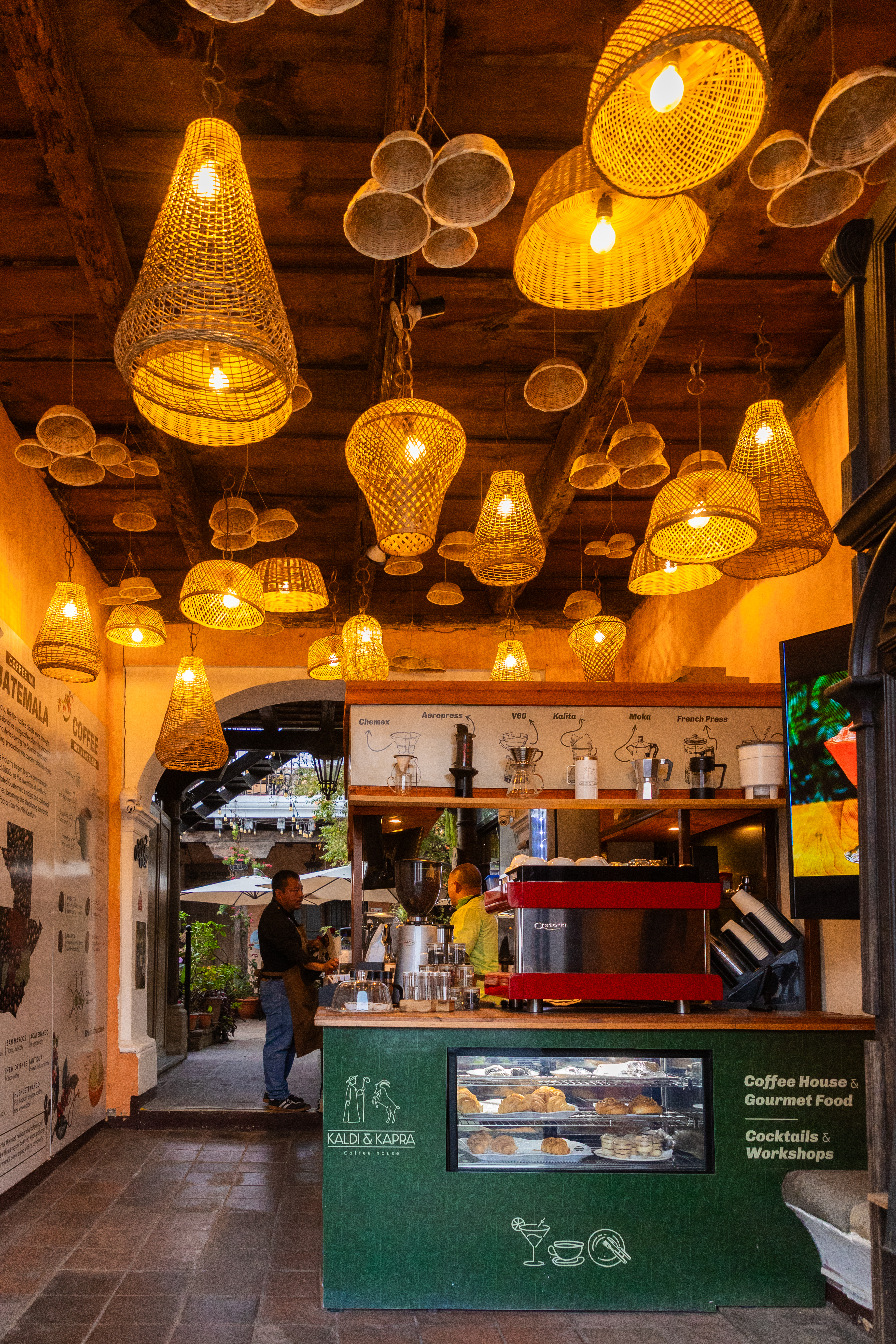
At Kaldi & Kapra, our professional bilingual baristas run hands-on coffee workshops, including cupping, roasting and latte art. It's the easiest way to go from "I like this coffee" to understanding exactly why, with a view of the volcanoes from our rooftop.
Ready to taste the difference? Book a coffee workshop at Kaldi & Kapra and discover what's really in your cup.